GuidesMedication guide
Tirzepatide, explained properly
The dual-hormone medication: how it differs from a GLP-1 alone, what the SURMOUNT trial actually measured, and the same honest safety facts we publish for everything.
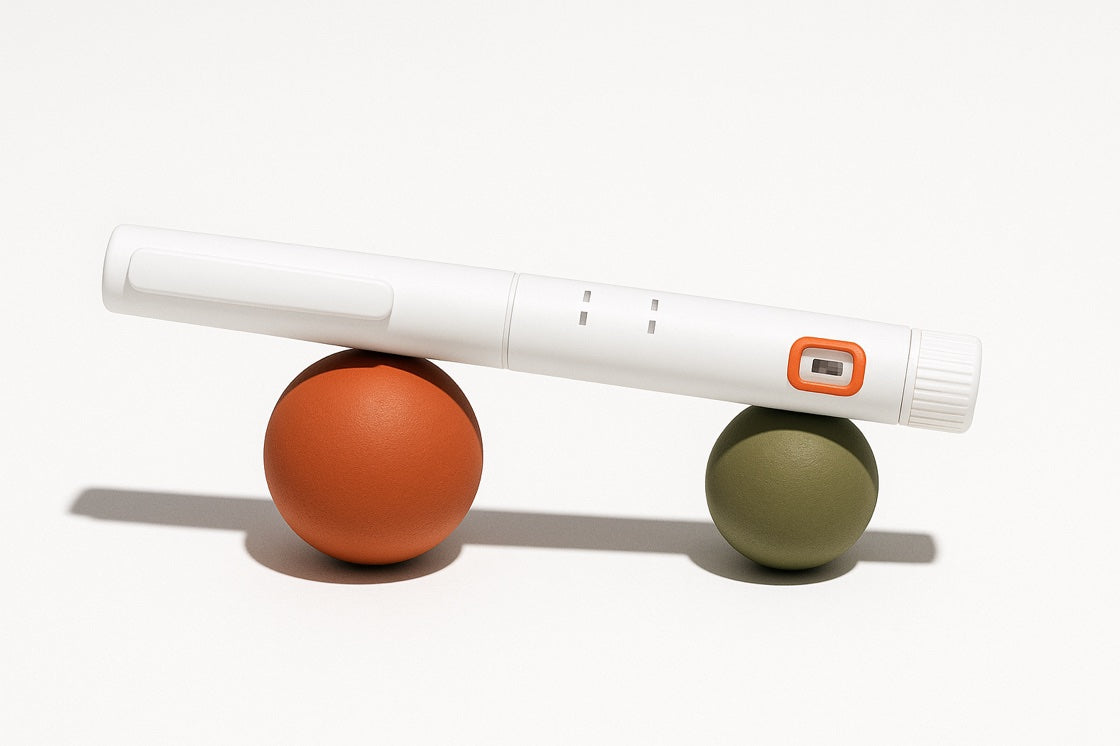
What tirzepatide is
Tirzepatide works on two gut-hormone receptors at once: GLP-1, the satiety signal semaglutide mimics, and GIP, a second hormone involved in how your body handles fat and insulin. One weekly injection carries both signals.
It’s the newer of the two major weight-management molecules, prescribed since 2022, and in trials the dual mechanism produced the largest average weight reduction of any medication available today. On Conduit it is compounded by a licensed US pharmacy against your physician’s individual prescription.
What the trials showed — and how to read them
In the 72-week SURMOUNT-1 trial, adults on the highest weekly dose lost an average of 22.5% of their body weight; the lower doses averaged 16% and 21%. Those are means across thousands of participants, alongside lifestyle support — not a floor, not a promise, and not what every individual experiences.
The honest comparison with semaglutide: tirzepatide’s trial averages are higher, its side-effect profile is similar, and it is the more expensive molecule. Which one is right for you is a clinical judgment — your physician weighs your history, your goal, and your response, and switching later is a conversation, not a restart.
The dosing journey — the standard schedule
Like every medication in this class, tirzepatide starts low and steps up as your body adapts. The numbers below are the standard, published schedule — shown so you know the shape of the road. Your physician sets your actual pace from your check-ins, holds any step as long as it serves you, and many members maintain well below the maximum.
| Weeks | Weekly dose & what’s happening |
|---|---|
| Weeks 1–4 | 2.5 mg — the adaptation dose, not expected to be your working dose. Appetite effects often appear early; the scale usually moves later. |
| Weeks 5–8 | 5 mg — the first maintenance-eligible dose. For a meaningful share of members this is where they stay. |
| Week 9 onward | If needed, steps of 2.5 mg no more often than every four weeks — through 7.5, 10, 12.5, up to a maximum of 15 mg. Each step is a check-in decision, not a schedule; most of the adjustment symptoms live at these step-ups. |
Your Conduit price is identical at every dose. The pharmacy cost of this molecule rises steeply with dose — that’s our problem, not yours.
Side effects, honestly
The profile is close to semaglutide’s: mostly gastrointestinal — nausea, constipation, diarrhea, reflux, bloating, fatigue — concentrated around dose increases and fading with adaptation. The same mechanics help: smaller and slower meals, real hydration, easy on alcohol and heavy food in step-up weeks.
Anything beyond nuisance-level belongs in your check-in. Slowing the climb solves most problems, and your physician would always rather hold a dose than have you white-knuckle one.
Stop and seek care if
The same short list applies to this entire medication class — these mean care now:
- Severe abdominal pain that doesn’t pass, especially radiating to your back
- Vomiting that won’t stop, or serious dehydration
- Yellowing of skin or eyes
- Facial or throat swelling, difficulty breathing
The serious risks, plainly
The class risks are the same set we publish for semaglutide, stated without the legal typeface — plus one interaction specific enough to deserve its own line:
- Thyroid — rodent studies of this class produced C-cell thyroid tumors; human relevance is unknown, and it is never prescribed with a personal or family history of medullary thyroid carcinoma or MEN2. A new neck lump, hoarseness, or trouble swallowing goes to a doctor regardless.
- Pancreatitis — rare and serious; the reason severe abdominal pain radiating to your back means care now, and a history of it changes the prescribing conversation.
- Gallbladder — rapid weight loss raises gallstone risk on its own, and trials saw more gallbladder events on medication. New right-side pain after meals deserves care.
- Kidneys — vomiting or diarrhea you don’t rehydrate from can strain them; hydration during titration is medical, not optional.
- Low blood sugar — chiefly in combination with insulin or sulfonylureas, which is exactly why the intake asks.
- Mood — watch for new or worsening depression or thoughts of self-harm; uncommon, screened at check-ins, and always a message to your physician, never something to sit with.
- Pregnancy — not used while pregnant or breastfeeding; if you are planning a pregnancy, stopping is planned in advance with your physician.
- Birth-control pills — this one is tirzepatide-specific: because it slows stomach emptying, oral contraceptives may absorb less reliably around your start and around each dose increase. The prescribing guidance is a backup method for four weeks after starting and after each step-up. If you use the pill, say so at intake — your physician will give you the exact window.
Who it isn’t for
The stops mirror the class: personal or family history of medullary thyroid carcinoma or MEN2, pregnancy or breastfeeding, active eating-disorder treatment. Histories of pancreatitis, gallbladder disease, gastroparesis, or insulin-dependent diabetes require a real conversation and may mean a different answer. Your intake exists so the physician can make that call before anything ships — and sometimes the call is no.
Questions members actually ask
I take birth-control pills. Does tirzepatide affect them?
It can — slower stomach emptying may reduce how reliably the pill absorbs around your start and around each dose increase. Standard guidance is a backup method for four weeks after initiation and after each step-up. Tell your physician you use oral contraception and they’ll give you the exact window; non-oral methods (IUD, implant, patch, ring) aren’t affected by this mechanism.
Tirzepatide or semaglutide — which should I choose?
You don’t have to decide alone; that’s the point of the review. Broadly: tirzepatide posted higher trial averages and costs more; semaglutide has a longer track record at lower cost. Your physician weighs your history and goal, and members can switch later if the response argues for it.
Is 22.5% what I should expect?
It’s the average at the highest dose over 72 weeks in SURMOUNT-1 — some did better, some did less, and many members never need the top dose. Treat it as evidence the mechanism is powerful, not as your forecast.
Are the side effects worse than semaglutide’s?
The profile is similar — GI-centered, front-loaded at dose changes, managed the same way. In trials, discontinuation rates for side effects were in the same range for both molecules.
Why is this protocol more expensive?
The raw molecule costs the pharmacy several times what semaglutide does, and the gap widens at higher doses. We price it flat anyway — same number at every dose — and the difference between the two protocols reflects that underlying cost, not a markup on outcomes.
Sources
Important Safety Information for Compounded Tirzepatide →
This guide is educational and is not medical advice. It restates the Conduit clinical protocol in plain language; your physician’s individual guidance always comes first. If you are experiencing a medical emergency, call 911.