GuidesMedication guide
Semaglutide vs. tirzepatide, honestly compared
One signal or two, what the trials actually measured — including the head-to-head — what they cost on Conduit, and how a physician really decides between them.
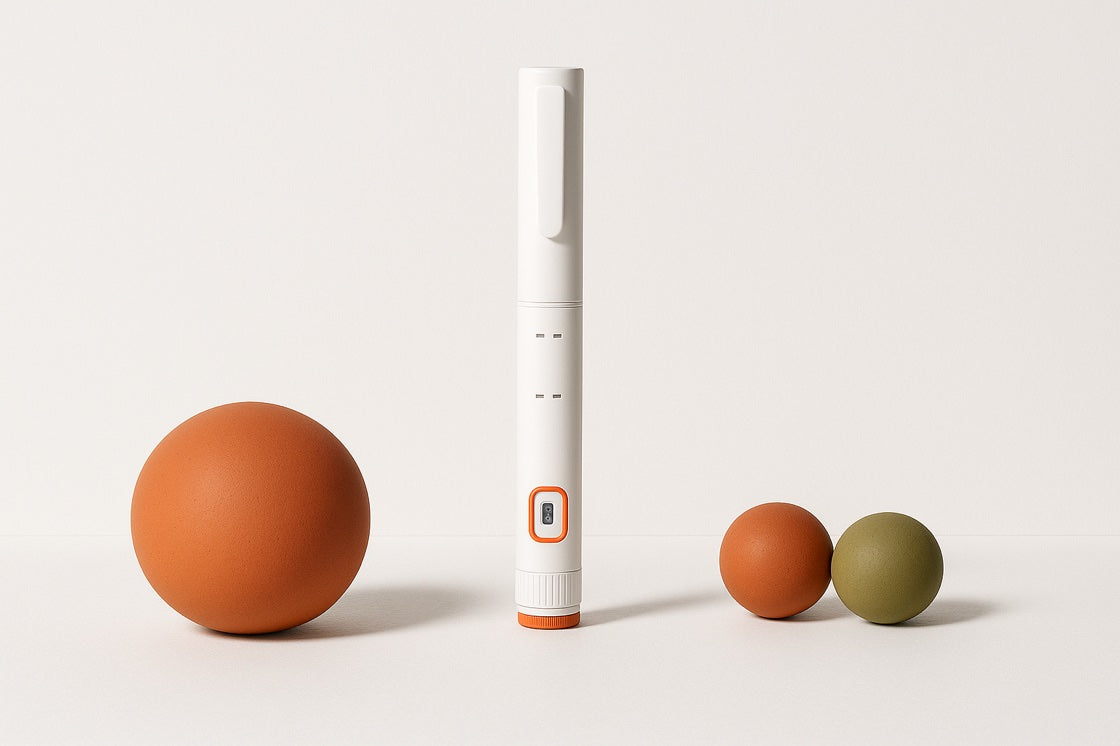
Two medications, one decision
If you’ve narrowed your research to these two names, you’ve already found the right neighborhood: semaglutide and tirzepatide are the two most-studied weight-management medications available today, and they’re the medications behind Conduit’s two weight protocols. They work on the same system, feel similar to take, and differ in ways that are real but easy to overstate.
This page lays out those differences the way we’d want them laid out for us — mechanisms, the actual trial numbers with their sources, costs, and the honest logic a physician uses to choose. What it can’t do is make the choice: that’s a clinical decision your physician makes with your history in front of them, and on Conduit the same review covers you for either.
One signal or two
Semaglutide is a GLP-1 receptor agonist: it mimics one of the gut hormones that tells your brain you’re satisfied, slows stomach emptying, and steadies blood sugar. One weekly injection carries that single, steady signal — it’s the mechanism with the longest track record in this class, prescribed since 2017.
Tirzepatide carries the same GLP-1 signal plus a second one: GIP, a hormone involved in how your body handles fat and insulin. The dual mechanism is the newer science, prescribed since 2022, and it’s the main reason tirzepatide posts larger average numbers in trials. Same injection rhythm, same pen, one extra signal.
Side by side
The trial figures below are averages from different studies of each medication, reported with their sources — trial populations and durations differ, so treat cross-trial numbers as context, and the head-to-head section below as the direct comparison.
| Semaglutide | Tirzepatide |
|---|---|
| Mimics GLP-1 — the satiety signal. Prescribed since 2017. | Mimics GLP-1 + GIP — satiety plus fat-and-insulin handling. Prescribed since 2022. |
| STEP trials: ~15% average body-weight loss over 68 weeks; about a third of participants lost 20% or more. | SURMOUNT-1: 22.5% average at the top dose over 72 weeks; 16% and 21% at lower doses. |
| Weekly injection; physician-set ladder from 0.25 mg up to 2.4 mg. | Weekly injection; physician-set ladder from 2.5 mg up to 15 mg. |
| Digestive side effects, early and dose-paced. Standard GLP-1 cautions apply. | Same side-effect family — plus reduced birth-control-pill effectiveness after starting and after each dose increase (backup method advised). |
| On Conduit: the Weight Loss Protocol, from $200/mo*. | On Conduit: the Advanced Weight Loss Protocol, from $267/mo*. |
*Lowest published rate on a prepaid plan; monthly and longer terms are shown at checkout.
What the head-to-head actually showed
For years this comparison relied on lining up separate trials — until SURMOUNT-5, a randomized head-to-head that treated participants with obesity for 72 weeks on the highest tolerated dose of each. The result: tirzepatide averaged roughly 20% body-weight loss versus roughly 14% for semaglutide. That’s a real, consistent difference in the averages, and it’s why tirzepatide anchors our Advanced protocol.
Two honest caveats before that settles the question. Averages hide spread: plenty of semaglutide responders outperform typical tirzepatide results, and individual response is genuinely unpredictable in advance. And more average loss is not the goal by itself — the goal is the result you can hold, at a pace and cost you can sustain, on a medication you tolerate well. A strong responder on semaglutide has no reason to envy anyone.
How a physician actually chooses
The decision framework your Conduit physician applies is less dramatic than the internet debate:
- How much weight matters clinically for you — larger goals tilt toward the dual mechanism’s larger averages.
- Your history — the contraindications are nearly identical (thyroid cancer history, MEN 2, pancreatitis, pregnancy), but details like birth-control method or prior GLP-1 experience can tip the choice.
- Tolerance — if one medication proves rough on your stomach at useful doses, the other is a legitimate next move, not a failure.
- Budget over the real horizon — this is a months-long treatment; a protocol you can afford to stay on beats a stronger one you have to quit. The $67/month difference compounds.
- Response — the decision isn’t one-and-done. Your monthly check-ins exist precisely so the plan can change when the evidence about your body arrives.
Switching is routine
Starting on one medication doesn’t lock you in. Members switch in both directions — up to tirzepatide when response plateaus, down to semaglutide when budget or side effects say so — and on Conduit a switch is a physician decision made at a check-in, not a new application. The same clinical review covers both protocols.
The honest bottom line
If the averages were the whole story, everyone would take tirzepatide. They’re not: semaglutide’s track record is longer, its results transformed medicine before tirzepatide existed, and for a large share of people it delivers everything they came for at a lower price. Tirzepatide earns its premium in the averages and in larger goals.
Pick the one you can sustain, with a physician watching how your body actually answers. Both roads are open here, the review is the same two-minute check either way, and the plan can change as you do.
Questions members actually ask
Which one is stronger?
By trial averages, tirzepatide — roughly 20% versus roughly 14% body-weight loss in the 72-week head-to-head SURMOUNT-5 trial. But averages aren’t predictions: individual response varies widely on both, and many people on semaglutide outperform the tirzepatide average. Stronger-on-average is one input into the decision, not the decision.
Why does tirzepatide cost more?
It’s the newer molecule with the larger trial averages, and its ingredient cost to the compounding pharmacy is higher. On Conduit the difference is $67/month at the lowest published rates ($200 vs. $267). Whether that buys anything for you specifically is exactly the conversation to have at your review.
Can I start on one and switch to the other?
Yes — it’s routine, in both directions, and it happens at a monthly check-in as a physician decision rather than a new application. Dose mapping between the two is handled clinically; don’t attempt it yourself.
Are the side effects different?
Mostly no — both produce the same early, digestive, dose-paced side-effect family, and the serious-risk lists are nearly identical. The one practical difference: tirzepatide can reduce birth-control-pill effectiveness after starting and after each dose increase, so pill users need a backup method during those windows.
Do they use the same pen?
On Conduit, yes — the same weekly pen and the same once-a-week rhythm. Day to day, the two protocols feel identical to run; the difference is the molecule in the cartridge and the dose ladder your physician manages.
How do I know which one I should choose?
You don’t have to know — that’s the point of the review. The 2-minute check recommends a starting point based on your goal, and the physician who reviews your intake confirms or changes it against your full history. Both medications sit behind the same door.
Sources
This guide is educational and is not medical advice. It restates the Conduit clinical protocol in plain language; your physician’s individual guidance always comes first. If you are experiencing a medical emergency, call 911.